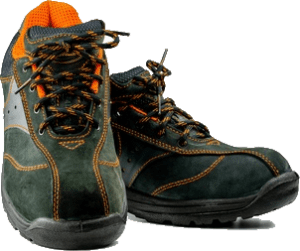
Updated on 7th January 2026. You can claim if you were injured in an accident at work because your employer acted negligently by providing no safety shoes. Employers have a legal obligation to supply personal protective equipment (PPE) in certain workplaces to protect workers’ health and safety. Workers shouldn’t have to endure the often devastating impact of being injured due to a lack of work safety boots, but Legal Expert is here to give you the support you deserve if you’ve experienced this.
Our advisors are available 24/7 to answer any FAQs you may have about your lack of safety shoes at work claim. Specifically, they can help assess your eligibility to claim and outline the services offered by our expert solicitors. Notably, our solicitors offer their services to eligible claimants on a No Win No Fee basis. In other words, you can claim with confidence and without delay. If you are seeking experienced and compassionate legal representation, Legal Expert may be the right fit for you.
What You Need To Know
What kind of injuries can a lack of PPE cause? Injuries sustained can range from broken bones to punctures and nerve damage.
What should I do if my employer hasn’t provided me with PPE? You should review your company’s safety policies regarding safety shoes and report the lack of PPE in writing to your employer.
Why is safety footwear important? Safety shoes are crucial for protecting your feet from punctures, falling objects, slips, electrical shocks, and crushing incidents.
How are no safety boots compensation claims valued? Compensation is determined by the type of injury you have suffered, its severity and whether you have encountered financial losses.
How long do you have to claim for a workplace accident with no safety shoes? You generally have 3 years from the date of the accident to start a claim for personal injury compensation.
If you would like to find out more about making a claim with Legal Expert, please get in touch.
4.8 (466 reviews)
We're No Win No Fee Solicitors Trusted by thousands to win compensation.
When Can I Claim For Accidents Caused By No Safety Shoes?
Per the Health and Safety at Work etc. Act 1974 (HASAWA), your employer owes you a duty of care. Per this duty of care, they must take reasonably practicable steps to ensure your safety whilst in the workplace and performing work-related duties. Employers could maintain their duty of care by performing regular risk assessments and removing any potential hazards.
Additionally, the Personal Protective Equipment at Work Regulations 1992 state that if a risk has been identified and cannot be controlled in any other way, then PPE must be provided by your employer. This could include wearing work boots or goggles.
There are various instances where you may need to wear safety boots. For example, you may need to wear anti-slip footwear while working on a building site or steel-toe-capped boots in a warehouse. Your employer must also ensure that the shoes are in good condition and fit comfortably. If an employer failed to provide safety shoes for a warehouse job, an injury could occur. You could make a personal injury claim if you can prove that you were injured due to your employer breaching their duty of care.
Contact our advisors today to see whether you may be eligible for compensation if your employer failed to provide you with safety boots for your warehouse job. They could also answer any of the questions you may have about starting an accident at work claim.
Does My Employer Have To Provide Safety Boots In The UK?
As discussed above, your employer owes you a duty of care. Failing to adhere to this duty is employer negligence. If you suffer an injury in an accident at work due to employer negligence, you might be eligible for compensation.
You may want to know, ‘does my employer have to provide safety boots in the UK?’. As part of their duty of care, your employer is expected to adhere to the Management of Health and Safety at Work Regulations 1999. This states that your employer should carry out a risk assessment. If this identifies a risk that cannot be mitigated in any other way, then they have to provide safety boots. This is set out under the Personal Protective Equipment at Work Regulations 1992.
For example, a risk assessment may identify the need for safety shoes for warehouse employees. If you injure your foot because these weren’t provided, you could be eligible for compensation.
Call our advisors to learn more about health and safety footwear regulations in the UK. They can assess your claim and if it seems eligible, you could be passed onto one of our No Win No Fee solicitors.
Hazards of Not Wearing PPE
Your employer must undertake, at least annually or more frequently if required, a full health and safety risk assessment. Risks that have been identified must be eliminated or controlled. Where all other forms of risk management are unsuitable, personal protective equipment should be worn. This is to protect you from injury – or even death.
Slipping or tripping on uneven or slippery surfaces.
Not all PPE is easy to wear. In order to armour the foot and protect it against crushing and puncture risks, safety boots are made of heavy materials and incorporate steel toecaps and midsections. This can make them heavy to wear. This, in turn, can lead to employees asking, “Can I wear my own safety shoes at work?” or even refusing to wear PPE. Not using the provided safety equipment increases your chance of a serious accident and may mean you have no claim, even if you suffer major injury or death whilst working.
How Long Do I Have To Claim?
If you meet the eligibility criteria to make a workplace accident claim for the injuries you suffered due to inadequate safety shoes in a warehouse, you must also ensure that you begin proceedings within the correct time limit.
The time limit for personal injury claims is set out by the Limitation Act 1980, which states that you will generally have three years to start your claim from the date of the accident. But there are some exceptions to this rule.
For example, the time limit is completely suspended for those who lack the mental capacity to make a claim for themselves. If the appropriate capacity is recovered, then the time limit will reinstate on the date of their recovery. Alternatively, a litigation friend could make a claim on their behalf while the time limit is suspended.
The time limit is temporarily suspended for claimants under 18. In these cases, the limit does not begin until they are 18 and expires on their 21st birthday. As above, a litigation friend could begin their claim for them while the time limit is frozen.
For more information on time limits when claiming for injuries caused in a warehouse because of no safety shoes, get in touch with our team today.
Average Compensation For Injuries Caused By A Lack Of Work Safety Boots
If your personal injury claim succeeds, you could receive two heads of claim. The first is general damages, and this head is awarded to every successful claimant, as it covers the injuries you have sustained and the effect that they will have on your life.
Those who value this head of claim can refer to the Judicial College Guidelines (JCG) for help. The JCG provides a list of physical and psychological injuries alongside guideline compensation brackets. You can find some examples of these guideline brackets in the table below, but please note that the first entry has not been taken from the JCG. Moreover, please use our table as guidance only.
Injury Type
Amount
Notes
Multiple Severe Injuries + Special Damages
Up to £500,000+
Multiple severe injuries plus financial losses, such as lost earnings, travel costs and private medical bills.
Foot Injuries - Very Severe
£102,470 to £133,810
The person suffers with severe pain and a permanent disability, potentially due to the forefoot being amputated.
Foot Injuries - Severe
£51,220 to £85,460
Both feet or heels have been fractures which causes permanent pain and restricted mobility.
Foot Injuries - Serious
£30,500 to £47,840
Traumatic arthritis that causes continuing pain. There may also be a future risk of fusion surgery.
Foot Injuries - Moderate
£16,770 to £30,500
Continuing symptoms and a permanent deformity due to displaced metatarsal fractures.
Foot Injuries - Modest
Up to £16,770
Pain and aching, among other symptoms, caused by puncture wounds, ruptured ligaments or simple metatarsal fractures.
Toe Injuries - Amputation of All Toes
£44,570 to £68,430
All the toes have been amputated. Whether amputation was traumatic or not will affect how much is awarded.
Toe Injuries - Amputation of the Great Toe
In the region of £38,210
The big toe has been amputated.
Toe Injuries - Severe
£16,770 to £25,710
One or toes have been amputated due to a severe crush injury.
Toe Injuries - Serious
£11,720 to £16,770
Multiple fractures in one or two toes, or the big toe has been crushed which causes pain and discomfort.
The second head of claim you could receive is special damages. Under this heading, you could claim back the cost of any financial losses caused by your injuries. For example, this could include lost earnings, travel costs, and medication expenses.
To be able to claim for these losses, you will need to provide evidence of them. This could include payslips, receipts and invoices.
To learn more about making a personal injury claim for an accident caused by no safety shoes, contact our team of advisors today. Or, to learn more about how a No Win No Fee solicitor could help you claim for an injury caused by a lack of safety footwear, read on.
4.8 (466 reviews)
We're No Win No Fee Solicitors Trusted by thousands to win compensation.
No Win No Fee Claims For Accidents Caused By No Safety Shoes
Now that you know more about how a lack of safety footwear could contribute to an accident at work, you might be ready to start your claim. If so, one of our expert personal injury solicitors could help, provided you have a valid case.
Our solicitors provide their services on a No Win No Fee basis, and do so by offering their clients a Conditional Fee Agreement (CFA). This means that they will start working on your claim without asking for an upfront fee for their services, and you won’t need to pay them for their work if the claim fails.
However, if your claim for injuries caused by a lack of safety footwear succeeds, your solicitor will take a success fee. This is small, legally-capped percentage of your compensation.
Contact a member of our advisory team today to learn more. They can evaluate your claim for free, and answer any questions you may have about the claims process. If they find that you have the basis of a valid claim, they may then connect you with one of our solicitors.
 Skip to content