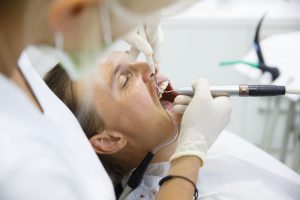
Last Updated 12th August 2025. Dental negligence claims are often warranted after you experience negligent incidents like the removal of the wrong tooth. Such occurrences can cause significant pain and suffering and may leave lasting injuries.
As we’ll see below, you could sue a negligent dentist for various reasons, including poorly executed surgical procedures, inaccurate diagnosis of a condition, and wrong medication prescription. We also look at some other reasons why suing a dentist could be a justified course of action.
If you have suffered because of negligence during dental treatment, having professional legal representation can give you the best chance of making a successful claim. And this is where we can help.
Contact Our Team
Our team of dental negligence solicitors work on a No Win No Fee basis, meaning you can access the legal advice and support you need without having to break the bank. And we can offer you support today, without any obligation on your part to proceed with your personal injury claim. You can:
Write to us about your claim online using our contact us form.
Chat with our clinical negligence advisers now by using our live chat in the bottom right.
Read on to learn more about how to claim for dental negligence.
What Is Dental Negligence?
Dental negligence is a form of clinical negligence that typically impacts a patient’s oral health. It occurs when dental professionals provide inadequate treatment or fail to provide any treatment at all, this is known as an omission.
Dental negligence often results in patients suffering from oral harm that was unnecessary or could have been avoided if the dental professional followed the correct standard of care.
Although some dental treatments may impose risks, it is your dentist’s duty to ensure you are made aware of them before proceeding with the dental procedure. If your dentist fails to do so and you suffer harm, this may be considered negligent.
Here are some examples of the type of harm dental patients may suffer if their dentist was negligent:
Oral infections if dentists use unsterile equipment
Wrong tooth extractions or fillings
Extreme pain if the dentist fails to correctly numb the patient’s gum
Failing to provide the correct or any medication
Cosmetic changes which may have a psychological impact on the patient
Dental negligence can have a minor or catastrophic impact on your life. However, regardless of the type of harm this caused you, you may be entitled to dental negligence compensation.
You can contact our helpful advisors today to learn more about dental negligence claims. There will be no obligation to start a claim, this will just give you the opportunity to understand the claims process and compensation in more detail.
Eligibility Criteria For Dental Negligence Claims
Dentists are trained professionals who are expected to provide care at the correct standard. This is the duty of care that dental professionals owe to their patients. Failing to uphold this standard can lead to their patients experiencing avoidable, and potentially very serious, harm. We have summarised the eligibility criteria for a dental negligence claim here:
A dentist owed you a duty of care as their patient.
They breached this duty through their failure to provide dental care at the correct standard.
This breach caused you to experience avoidable harm.
By “avoidable harm” we mean any harm that you would not have incurred had you received the correct standard of care. We’ll examine some examples of this later in the guide.
4.8 (466 reviews)
We're No Win No Fee Solicitors Trusted by thousands to win compensation.
In most cases of dental negligence, a claim will need to be made within 3 years, as per the Limitation Act 1980. However, there can be exceptions to this:
Minors will have the time limit paused until they turn 18.
Those lacking sufficient mental capacity will have the time limit frozen altogether.
A suitable adult can apply to be a litigation friend in these situations and, therefore, act on the injured person’s behalf. You can get more information on the time limits, or ask our advisors “can you sue a dentist?” by using the contact information given above.
Examples Of Dentist Negligence You Could Claim Compensation For
Dentist negligence claims can be made in a variety of different circumstances. A few potential examples are provided below.
Cases of dental negligence you could claim compensation for can include:
Your dental abscess was misdiagnosed as a simple case of toothache. The delay in treatment resulted in a significant worsening of your condition.
Nerves in your face were damaged during a root canal treatment, leaving the left side of your face paralysed.
The examples given above are by no means the only ways in which a dentist could fail to provide the expected level of care. For more advice on suing the dentist after they failed to meet the correct standing of care, causing you avoidable harm, get in touch with our advisors today. Our team are available 24 hours a day via the contact information given below.
4.8 (466 reviews)
We're No Win No Fee Solicitors Trusted by thousands to win compensation.
If you feel like you’ve received poor treatment from your dentist, you’re well within your rights to make a complaint.
Making a complaint brings with it a number of benefits. First, you can highlight poor care which can be investigated and addressed. This may prevent other patients from suffering the same problems.
Second, if you choose to make a compensation claim, the fact you have lodged a complaint can help support your case. The outcome of the complaint can also be important in proving negligence
How To Make A Complaint To Your Dentist
So now you know why it’s important to raise a complaint, let’s look at how to do it.
The first step is to contact your dentist’s office. They should have a complaints procedure in place. When giving your complaint, make sure you provide as much information as possible.
Your dentist should provide a response to your request within the time specified.
If you’re unsatisfied with the response given, you could make a complaint to the General Dental Council. This is the governing body of dentists in the country. You can only raise complaints about certain issues, such as serious and consistent errors in caring for patients, significant breaches of confidentiality, and a failure to respond to a patient’s needs.
It can take up to 18 months for the Council to complete an investigation. However, if found in the wrong, they can be removed off the register of dentists.
What Evidence Do I Need To Sue A Dentist?
You might be wondering if you need evidence to make a dental negligence claim. Evidence is crucial, as it can help illustrate who owed you a duty of care, how this duty was breached, and how it has affected you. Some examples of evidence that you could use to prove dental negligence include:
Dental records: Dental and medical records can help illustrate how you have been harmed, as well as the treatment you will need in the future. These could include test results, dental X-rays, and scans.
Witness statements: Taking down the contact details of any witnesses, such as a family member or a chaperone present at your appointment, means that their statement can be taken later.
A symptoms diary: Keeping a symptoms diary can help demonstrate the harm you’ve undergone. For example, if you are having trouble eating or drinking after a dentist removed the wrong tooth or teeth, this could be recorded in your diary.
To learn more about how to sue a dentist, keep reading. Or, contact our team of advisors to get more information on claiming dental negligence payouts in the UK.
4.8 (466 reviews)
We're No Win No Fee Solicitors Trusted by thousands to win compensation.
Generally, compensation in dental negligence claims can be split into two heads of loss. The first of these, general damages, compensate you for the physical and psychological harm you’ve experienced as a result of dental malpractice. It also covers loss of amenity, which means loss of enjoyment. For example, if you lost two of your front teeth, this could mean you no longer enjoy socialising with friends.
When professionals value this head of claim, they can take help from the Judicial College Guidelines (JCG). This document contains a list of guideline compensation amounts, which you can see some examples of in the table below.
Be aware that the first entry in this list is not from the JCG, and that these figures are only illustrative.
Injury
Severity
Compensation Guideline
Multiple Severe Injuries and Special Damages
Very Severe
Up to £100,000+
Skeletal Injuries
Jaw Fractures (i)
£37,210 to £55,570
Jaw Fractures (ii)
£21,920 to £37,210
Jaw Fractures (iii)
£7,880 to £10,660
Skeletal Injuries
Damage to Teeth -Significant
Up to £46,540
Damage to Teeth (i)
£10,660 to £13,930
Facial Disfigurement
Significant Scarring
£11,120 to £36,720
Less Significant Scarring
£4,820 to £16,770
[link_btns_2]
Can I Claim Back Lost Earnings When I Sue A Dentist?
Yes, if you lost out on earnings because of the harm you suffered, then you could potentially claim them back when you sue a dentist. These kinds of losses fall under special damages, which covers the financial impacts of the harm you suffered.
For example, this heading may also cover the cost of:
Dentures
Further dental treatment
Prescriptions
Childcare
Counselling
These are only a few examples of the kinds of costs that could be covered by a dental negligence claim. Contact our team today to learn more.
Obtaining health records: the claimant will need to request their records from their provider, being as specific as they can.
Rehabilitation: all parties must consider the needs of the claimant and ensure any rehabilitation or other treatment is put in place as soon as possible.
Letter of Claim: The Letter of Claim formally notifies the defendant that a claim is being made against them. It should set out the harm caused, what grounds the claim is being made on and a summary of any financial losses.
Letter of Response: A Letter of Claim should be acknowledged within 14 days. The defendant then has 4 months to provide a Letter of Response. In this letter, they must state whether they are accepting or disputing the claim and their reasoning.
Experts: All parties may instruct medical experts to provide opinions. Cooperation on which experts are to be called is encouraged.
Alternative Dispute Resolution (ADR): ADR methods are the last step to reach a resolution before a trial. Such methods include mediation, where a third party facilitates the resolution, and arbitration, where that third party decides the dispute.
If the matter cannot be resolved through ADR, then the claim will progress to trial. We’d like to emphasise that the majority of claims are resolved through negotiation and discussion. If your claim does require a court hearing, however, our solicitors will support you to its conclusion.
To learn more about the dental negligence claims process, or to ask our advisors about claiming in your particular case, get in touch today using the details given below.
Make No Win No Fee Dental Negligence Claims
So, now that you know more about how to sue a dentist and why you should make a dental negligence claim, you might be wondering why we recommend working with a solicitor.
You aren’t legally required to claim with a solicitor, but it’s highly encouraged. This is because a solicitor already has years of knowledge, experience, and training to help you through the claims process.
Our team of expert dental negligence solicitors can talk you through the process of suing the dentist with patience, respect, and sensitivity. They can help you collect evidence to support your claim, prepare the case in the event it goes to trial, and explain any legal jargon that you don’t understand.
Plus, they can do all of this on a No Win No Fee basis. Our solicitors work under the terms of a Conditional Fee Agreement (CFA), which means that you get all of these specialist services without:
Paying for them upfront.
Paying for them as the claim is ongoing.
Paying for them at all if your claim fails.
If you make a successful claim with one of our specialist solicitors, they’ll take a small success fee from your compensation. This is legally-capped, and taken as a percentage.
4.8 (466 reviews)
We're No Win No Fee Solicitors Trusted by thousands to win compensation.
Our team of advisors are here to help. They can provide a free evaluation of your claim, and answer any questions you might have about claiming dental negligence compensation. Get in touch today to learn more by:
 Skip to content